
By Mark Olson
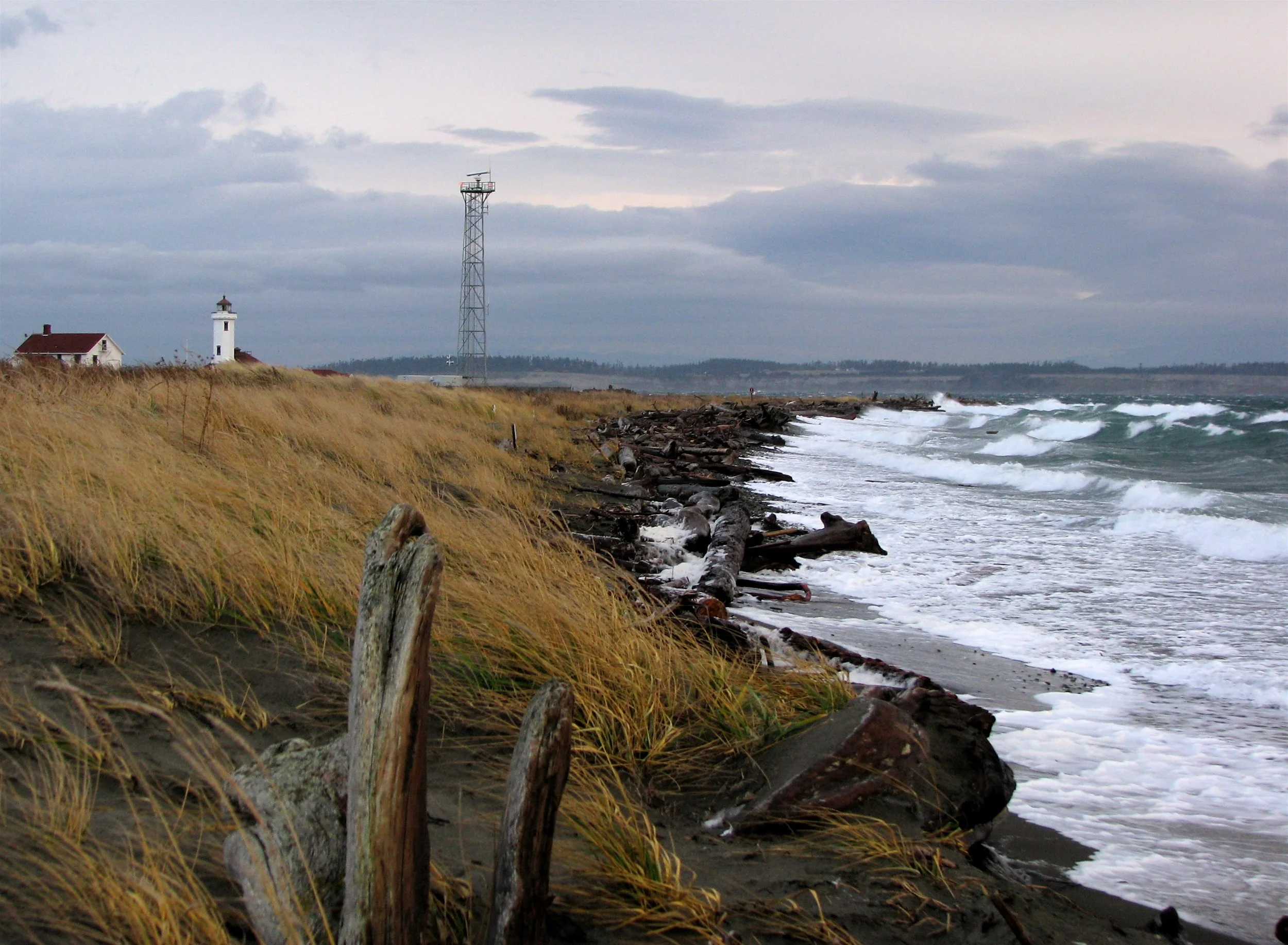
Kennewick was westbound for Port Townsend, when Seattle Traffic relayed the mayday. A frantic woman had phoned 911 from the beach at Point Wilson. The last words she had heard before her husband’s call dropped, was him shouting over the rising wind.
The last words he had heard, was his daughter, strapped in her mom’s backpack, crying out, “Daddy, don’t die!” before the saltwater silenced his phone, and any hope of ever calling back.
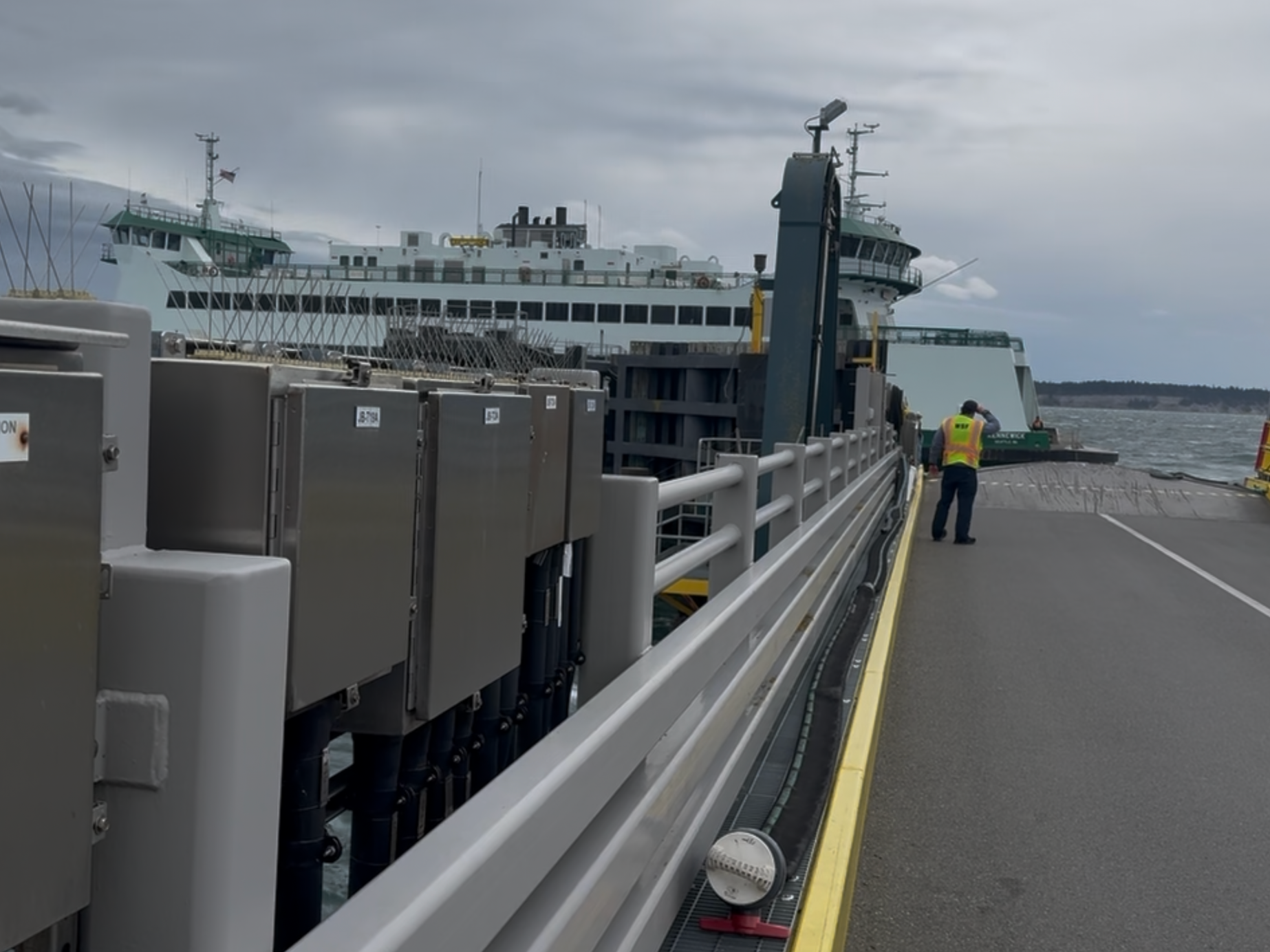
Walter and I were on break, up in the crew galley, when Howard, our chief mate, radioed, “Kennewick deck crew, we’ve got eyes on a guy on a paddleboard… looks to be in trouble… yup, he’s waving at us… crews to the rescue boats… I’m bringing her to a stop.”
I slapped a lid on my dinner and headed for the door. Walter pulled the blackout curtain back and called after me, “broad on our starboard bow,” before heading to the wheelhouse to relieve Matt. Captain Jeff met Walter at the door, freeing up Howard to go below with Matt. The Captain took the controls., while Walter pulled down the rescue log and uncapped his grease pen.
“Time?,” Jeff asked quietly.
“One minute, forty five seconds,” Walter rattled back, catching his list up to the present.
“Slow… still too slow,” the captain muttered.
I had switched to wool and fleece by then and beat feet to the boat, four decks below. Ben, (our Bosun and rescue coxswain) was calling out the steps of the launch as the thunder of 3,000-horsepower pushed back against our momentum, bringing 1,800+ long tons to all-stop. Tightening the straps of my PFD, I climbed into the Zodiac Hurricane, flopped over to the other side, while repeating every word Ben and our launch crew said, to show that I understood. Our entire team had assembled by then, bringing blankets, warming pads, the medical kit, it was all there.
A moment later the straps were free, the drain plug in, umbilical out, chocks down… and suddenly it was time to do for real what we practice every week, but this time the water wasn’t flat, we weren’t at the dock, and there could be no mistakes.
We ring the bells when we drill. The bells tell us what to do and where to go.
Sometimes the bells are silent. There isn’t enough time.
The crane’s cable comes tight and we were in the air, the davit’s arm is swinging out… and Ben is “ringing the bell” to release the friction brake. Now the cable is spooling out, as the boat’s outboard is trimmed down. We hit the water with a wet splat and suddenly the same ship that has kept us safe through every storm is the greatest danger in your tiny universe.
Every motion you make next serves only one purpose: Get away!
You are the the fly and the swatter looms over you, pitching and rolling. Bow and stern painters are cast off; the engine starts: the crane hook snaps open, instantly becoming a pendulum of death, as the waves do their best to crush your orange boat under the counter curve of the ferry, shaped like half a conduit, where the car deck thrusts out, but Ben isn’t being subtle with the throttle. With no time to warm up, we stand on our tail, and I’m pressing as low as my old body can go.
The passengers watch from above as a fluorescent stone is tossed from a giant’s hand to skip over the wavetops.
A moment later I catch the rhythm and use the momentum of rising to a wave’s crest to land behind Ben, and now two ride the wild seahorse, as I rattle off what I am doing, how I intend to move, the condition of the engine… all that a team does while making the best possible speed through the sea. We repeat everything the other person is saying - well, not everything, Ben just turned 40… and I met him when he was 16… plus we live on boats… and our personal skiffs are faster than the one we now sail… so… no… we don’t actually repeat everything.
Still, it’s blowing a near gale and the day is rather … nautical … and we do get wet, but not nearly as wet as the man we meet a minute later.
He keeps thanking us, over-and-over, and apologizing for all the trouble he has caused.
In the end, I suppose that is the purpose of this writing:
The need to clear up how the guy on the paddle board had it all backward.
Everyone needs help at one time or another. That’s just the way of things. My first shipwreck happened when I was 17-years-old. Now I am paying it forward by helping others.
I will never have the opportunity to pay back the men who rescued me, so what do I owe them? They were simply doing their job, as I did mine when I rescued a man on a paddle board.
So, who should we thank? Why be grateful at all?
I have my reasons and they are simple. I want to live in a world where I can expect people to care, and never turn a blind eye. This may make me sound like a Pollyanna, or a saint, but I’m neither. I’m an old hermit sailor, who is really quite selfish.
There was a moment in my life, when I was at my lowest.
I was at the hospital, unable to stand, wallowing in my own vomit and shit, and every person in the room looked away, ignoring me completely.
I remember thinking, “What would happen if fate gave me the opportunity to change what happened, giving me the power to make a difference in the way things are?”
Over time, that desire grew into a calling, as I rejoined the world of those who live at the mercy of the sea.
Now, when the months, weeks, days, minutes, and seconds run out, and we face our moment of terror, we sailors choose to trade places with the people in that hospital, having decided to do it differently.
Kennewick was westbound for Port Townsend when Seattle Traffic relayed the mayday… and I am so grateful that not a person in the room looked away.
Aug 3
There are moments when things literally go sideways
When the Bells Sound
By Mark Olson
We call the ship’s general alarm “the bells.”
Look for the ubiquitous red box mounted up near the ferry’s overhead.
Oh dear, I see I am off to a bad start. A ferry’s “overhead” is the ceiling and the “ceiling” is the wall.
So I’ll start over: on a ship, the panels over your head are actually called the overhead. The ceiling is the inner surface of the frames. The frames form the ship’s skeleton, rising from a backbone called the keel, and each frame is numbered.
In an emergency, you can radio your position by reading the number off a frame.
Ships are built in horizontal layers, called decks, like the floors of a house. The ship’s basement is the bilge. It’s a narrow space, running the length of the ship, down by the keel. Water flows downhill, so the bilge is the first place to collect water if the ship floods.
The layer above the bilge contains the engine spaces and all compartments associated with engineering. When visualizing a Roll on/Roll off ferry, think of it as a stack of pancakes, with the next pancake being the vehicle deck. In larger ferries there is an upper car deck, which also counts. A mezzanine deck would count, with the passenger cabin coming next, then the sun deck, (sometimes called the Texas deck,) and all these pancakes are topped by opposing wheelhouses.
Each of these pancakes has a number, but since we are fresh out of syrup, we’ll just call each pancake a deck.
With everything labeled, you can communicate a location in seconds, i.e. deck 3, frame 24, starboard side, but you still need to tell everyone aboard what has gone wrong.
The bells are the first voice conveying that information.
And there you have it: a city at sea, and on most days, the city behaves itself, going back-and-forth, from one shoreline to the other.
Then the day arrives when the bells sound, and suddenly, it is painfully apparent that you are surrounded, not by land, but by water so cold you cannot swim in it.
In that moment the map of your ship: frames, decks, port and starboard - these labels become essential in surviving long enough to watch another sunrise, as the bells ring a code that tell where to go, what the problem is, and what to do about it.
In that instant attention shifts from maintaining the entire ship, and sailors focus instead on what just happened: fire, flood, or has a person fallen outside the ship’s protective rail?
On the worst day imaginable, the bells sound their final call: telling us that our ship is dying and we must abandon her and take our chances with the sea.
Yes, I understand the bumper sticker I read last week: “All lives matter,” and they do. Of course they do. All lives matter just as the entire ship does.
But recently the bells have sounded and it’s time to listen; it’s time to decipher the code, to know where to go and what to do: what deck? what frame? who is over the side? what is on fire? is there water flooding into the bilge?
This is our ship. This is how we sail her. If we loose or focus and just go about our day, ignoring the bells, then they will not remain silent, and instead issue their final call: 6 short, followed by one long, and this time give no location, no frame, no deck,, no side…
… saying only that the ship is lost.